Download Transcript
Spencer Levy
On our survey of places that are shaping tomorrow's cities we take a detour. To one that's bridging past and future. On this episode, Cleveland, Ohio and its long legacy of converting older office space to other uses.
Ryan Sommers
I like to say we're good at conversions before it became cool.
Spencer Levy
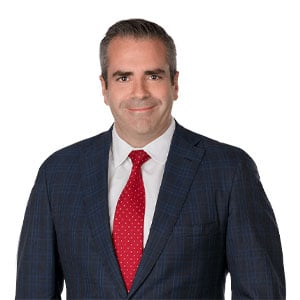
That's Ryan Sommers, Managing Director of Financial Services for Project Management Consultants. Ryan runs structured finance for a firm whose portfolio covers a wide range of project complexities, with a track record that includes small historic buildings, an NFL stadium and more.
Bhavin Patel
It is not a simple process, but it is extremely rewarding. And the finished product from a building that's a hundred years old is truly magical.
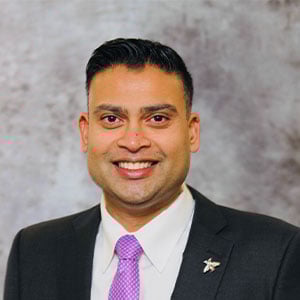
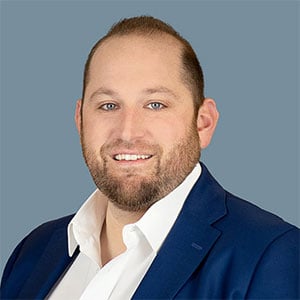
Spencer Levy And that's Bhavin Patel, Founder of Green Harvest Capital, a private equity firm that specializes in multifamily and hospitality assets. His latest project is Project Scarlet, an ambitious historical redevelopment right in the heart of Cleveland's central business district. And to tie it all together, we're also joined by CBRE’s own Jamie Dunford, who covers capital markets and investment sales for northeast Ohio.
Jamie Dunford
So our CBD is actually growing. It's one of the few in the country.
Spencer Levy
Coming up, Cleveland and the keys to successful conversions. Experience and insights for bridging the past and the future of cities. I'm Spencer Levy and that's right now on The Weekly Take.
Spencer Levy
Welcome to The Weekly Take. And we are here in Cleveland, the home of rock and roll and so many other great things. And we're going to talk about some of those great things today with a group of real estate experts, including Bhavin Patel, co-founder of Green Harvest Capital – B, as you've asked me to call you – how are you doing today?
Bhavin Patel
Wonderful, sir.
Spencer Levy
Thanks for coming out. Jamie Dunford, senior associate, CBRE. Jamie, thanks for coming out.
Jamie Dunford
Thank you.
Spencer Levy
And Ryan Sommers, Managing Director of Financial Services, Project Management Consultants. Ryan, thanks for coming out.
Ryan Sommers
Great to be here. Thanks for having me.
Spencer Levy
Thanks for coming out. So be as you've asked me to call you. Let's jump right into it. Project Scarlet, what is it?
Bhavin Patel
Project Scarlet is a historical building repositioning of the Medical Mutual headquarters here in Cleveland, Ohio. It's a 400,000-square-foot asset, which has been beautifully maintained over the years. Sits prominently on the corner of East Nine and Prospect. And we look to convert it to about 120 hospitality boutique hotel keys and about 160 multifamily units with a retail and a food and beverage component. What makes this project unique and special is that it is the first branded multifamily project that will come out of the ground here in the near future in the United States. I think we’ll be top three for sure. We hope to be the first and this will be a shift from our perspective in how multifamily conversions are done, because by branding the multifamily, you're able to deliver the value of franchise services to a long term state product.
Spencer Levy
Jamie, B had to buy the land, buy the building. What kind of capital markets activity are we seeing in downtown Cleveland?
Jamie Dunford
We're seeing interest from all over the country, including internationally, overseas, North America, South America. The Midwest is becoming now a real target for institutional capital. One being returns are predictable. You don't get the ebbs and flows of the coastal markets during downturns, right? And on the multifamily front, workforce housing, which has always been kind of the bread and butter here, tenants never trade up. They never trade down. It's predictable. And then really on the class-A, you're seeing institutional developers into our markets such as Samara Road out of New York City and a joint venture they're doing right down the street on Boulevard. And so you're seeing groups out of Dallas, Texas, come in and buying old buildings, rehabbing even new developments, whether it's the CBD or just kind of our outside pockets.
Spencer Levy
So when I speak to our colleagues or folks that are in the construction trade, the material difference between ground up and conversion is a greater level of certainty. It is the, “you don't know what's behind this wall, and you won't know until you swing the hammer.” And so that level of uncertainty has prevented a lot of conversion. So let's turn to you on this point, Ryan. Tell us about the complexity of the conversion project versus even a ground up stadium. Maybe it's easier. What's your point of view?
Ryan Sommers
Well, Cleveland and in particular the Midwest is unique. We suffer from high construction costs, very little inventory of land that's suitable for new construction. So we had to become very good at conversions even pre-pandemic. We have what I like to say, we have Boston construction costs and Cleveland rents. So it forced our hand into becoming good at conversions. I like to say we're good at conversions before it became cool. And that also forced-
Spencer Levy
You got rock and roll before it was cool too. So maybe you see a parallel there?
Ryan Sommers
There's definitely a parallel there. We had to rock and roll with conversions before the pandemic forced the rest of the country to do that. It also required public partners, our state, local, other governmental authorities, to provide financial tools for that to happen. And right around the pandemic, we're starting to run out of conversion opportunities. So you started to see some ground up projects that Jamie noted earlier take shape, to backfill parking lots and complement the conversions that were completed. So I think that's why in Cleveland it's become a leader, even though we're a smaller market. So we're ahead of the curve and we're getting calls. We work all over the country. Even though we're here, we're getting calls and asking, “How did you do this? How can you build this capital structure? What are the contractors do to address those scary things you find behind the walls?” So the complexity is multifaceted. But Cleveland is a leader in solving those problems, both in the finance, and the construction, and the delivery.
Spencer Levy
Let's go to that policy front for just a moment. B, from your perspective, what are the most important incentives that you need to see for a project to pencil out?
Bhavin Patel
Yeah. Typically, when we're looking and analyzing the project at a high level, it is the cost of conversion, the involvement in the participation of the city, state and federal government, everything from your historical tax credits down to CRAs and tips that can be put on the asset. Also financing from community banks or institutional lenders. And I think working with CBRE and PMC allows us to be able to bring that complex capital structure together before you start. And I think that's critical to understanding what the shortfalls are and how do you bridge those gaps in order for a project to be successful. You have to have vision. You have to be doing something innovative and you have to be able to think on your feet and solve real challenges. Like you mentioned, it is not a simple process, but it is extremely rewarding. And the finished product from a building that's a hundred years old is truly magical.
Spencer Levy
Well, when we walk into this very building where we're sitting right now, it's an old post office. And whoever designed the space did a great job in a historic building with huge floor plates, which led to what I consider to be world class space. And that's what you can get out of these buildings. The downside is the complexity and so on that complexity point, I was with a developer yesterday in Akron, Ohio at the Ace Mentor Program, a wonderful program that gets younger professionals into the construction and real estate business. And one of the developers said, If I can't get a permit in six weeks, this is in Akron, by the way. I'm not doing it. And that was the fastest permitting I've ever heard anywhere. Any permitting relief here in Cleveland?
Ryan Sommers
Yes, They're looking at permitting reform and they're trying to create, they're trying to reduce the friction and create a portal, a one stop shop where you can work for the different agencies. So they're trying to bring down those barriers and those walls. We're also seeing it on the zoning front. In the Midwest, zoning for distressed asset for conversion has never been an issue. But we're also seeing in other markets, we work in Dallas, Texas, and New York, places where zoning would preclude conversions. Those barriers are coming down because it's hard enough to deal with the scope and challenges on the construction and financing side that you can't have permitting friction, inefficiencies, delays get in the way of moving this project forward. So we are seeing our public partners being proactive. I think there's a lot of work to be done, but we're seeing less and less where a zoning, a height and air rights, a building permit delay is getting in the way of these projects. Right now, it's about capital and macroeconomics.
Spencer Levy
What are the biggest lessons that other cities can learn from Cleveland and conversions?
Ryan Sommers
I think if you could educate the public partners on what is needed to execute on a project from start to finish. We've talked about reducing friction with entitlements and zoning, different programs that from a financial incentive standpoint, if you really want to take a road map and educate at all levels. Another one is having the contractors that have experience. If there is a market that doesn't have contractors that are experienced in this complex office conversion redevelopments, bring the contractor with you. B is working with a firm, they’re called Cleveland Construction. It's a little bit of a misnomer because they work all over the country and they are doing some of the biggest conversions outside of Cleveland. Have the right team. You need to build a team. It's not just your lawyers and architects. It's your contractor. It's a lobbyist that can educate your public partners. So you really want to build a team and have a roadmap and have it be portable. Texas is a perfect example. They created an uncapped state historic tax credit. We are fortunate to work on the largest historic redevelopment in the state of Texas, and it took really smart people from outside Texas to come in, roll up their sleeves and say, Here's how we can help the local contractor governmental authorities to get to the finish line.
Bhavin Patel
I think Ryan did a great job of explaining the team approach. It takes a team and extreme expertise in what you're doing. As we had alluded to earlier, no two buildings are going to be the same. They all have their challenges. So you absolutely have to have a construction partner that has the depth and the breadth of knowledge to be able to face those challenges and overcome them. Nothing is impossible, right? Time and money solve all challenges, but having a good team will help you execute that project.
Jamie Dunford
It's from architects to bankers to legal to GCs to the right incentives groups. And also, what is your exit eventually? Is it a refi holding forever? or hey, I'm going to get you the broker now. Here's my pro forma development. Right? Here's my lease up, here's my stabilization. You've got to kind of look at it from every different angle possible.
Bhavin Patel
They think. Community involvement and engagement is critical. Whichever community that you do a project in, right. You have to be involved. You have to understand the local norms, the customs, the pain points and help solve for those. Like we always think about being a value add to wherever we do a project. We like to improve the area that we're in and have a long term commitment to it.
Spencer Levy
So let's turn to you now, Jamie, and talk about, what do people say when they're coming to Cleveland, say, well, this is the opportunity, this is the challenge. Tell us what the investor mindset is.
Jamie Dunford
It's a question of why. Right? And that's a question I get all the time is: Why Cleveland? Why am I looking here? Well, one, our market's on fire in my opinion, especially on the residential side. We've delivered probably north of 5000 units since 2020. Cleveland proper, they've all been stabilized. We're still north of 95% in class-A properties in the CBD on occupancy, which is pretty remarkable, too. We have a housing shortage here. That's going to stay that way for the next ten plus years, quite frankly, it's just not going to change as much as we want to change, it's just not feasible at this time, especially with construction starts have kind of just halted when we saw construction interest rates go from pretty much 2% to 8% in a matter of six months when 2022 to 2023. But really, the number one kind of thesis is, rent growth. One, It's cheaper to rent than it is to buy. Two, we're number three in the country right now in terms of rent growth projected to be number two in the next five years going forward. It's real. And you see the jobs that are coming here. Sure, Whalen has doubled down in the CBD with their new headquarters. You know, we have some of the highest concentration of Fortune 500 companies in northeast Ohio. So professional services compiled with our eds and meds, right? We call that University Circle District, Cleveland Clinic University Hospital, Case Western Reserve. That's the key drivers here.
Spencer Levy
B, let's expand on that point because we were talking before the show about what are the economic drivers and I'd like to hear from your perspective what they are. And let's talk about the broader picture with manufacturing and otherwise.
Bhavin Patel
The key drivers can be broken down into three categories, professional services, legacy manufacturing that is being transformed into manufacturing 4.0, as we like to call it, and then finally, oil and gas on a regional perspective. And the professional services, finance, insurance, hospitals and company HQs are big drivers for our economy. On the manufacturing side, steel production is being refined dramatically. Cliff is leading the charge in that. A lot of hydrogen that is going to be used to create cutting edge technologies that will produce steel at a low emissions level to manufacturing and things like that from the legacy manufacturing side. On the oil and gas, the resurgence of fracking, the transformation and the pivot from coal fired power plants to natural gas, and then all of these energy expansion that brings due to downstream polymer production, I think is going to be a great tailwind. Jimmy made a wonderful point about housing shortage. One of the key statistics in the state of Ohio is that we're the seventh largest by population in the United States, but 40th by new home starts. So therefore this conversion of legacy office space to multifamily has a higher demand factor and a need here. And I think public private partnerships, local city to state governments really feel the pressure of providing more housing. And therefore I think it enables a lot of these initiatives, streamlining of operations between permitting and zoning and things like that.
Spencer Levy
B, let's get into the financing of how this stuff actually works. I'm going to start with just a very basic concept and you walk me through, if this is correct and how we get there, that most developers will not touch a ground up multifamily development deal. The number used to be a 6% yield on cost. I think it's now moved up to 7 or 8%. What's the number for conversions? How do you get there?
Bhavin Patel
So it depends on the size of the project, right? We don't believe that under 100 units is feasible. I think you have to have enough scale. Second is condition of the project. As you mentioned earlier, it is so specific. In ground up construction, you can generalize based on land costs, construction costs, permitting costs, all of these things. In a conversion. It is very asset specific. The condition of the asset will drive almost everything. And then the historical nature of it. What will the preservation authorities want you to keep, move, how much structural engineering is going to be involved in the repurposing of it? If you're building a parking garage inside of a building, Well, what kind of restructuring has to be done there? So I can't give you a specific answer that's broad to the industry, but for our project, I think we have found a asset that is in terrific condition that allows our numbers to work from a hospitality, multifamily like combination perspective. If we try to do, in a 400,000ft², all multifamily, the cash flow wouldn't justify it. If we had tried to do 300 plus hotel keys. The cap rate wouldn't have justified the deal. The combination of the two, I believe, is the winner, and I think that's why it differentiates itself as a project in this market.
Spencer Levy
Banks look very differently at apartment projects than they do at hotel projects. How do you get them comfortable with doing both at the same time?
Bhavin Patel
Yeah, I think it comes down to the operator. We at Green Harvest Capital own and operate 1,500 multifamily units in Northeast Ohio. And our spark GHC brand operates 1700 hospitality units throughout the mid-Atlantic. And we have deep expertise in operating both and owning both. And so when we are talking to a lender, they look at us as a group that can understand the challenges and the sickle nature of hospitality and how to differentiate yourself, because that's a critical component to driving ADR and occupancy. Along with the multifamily servicing side. And understanding the market. So we're not over anticipating square foot rents or underestimating operating expenses, which is a big mistake that a lot of developers do.
Spencer Levy
Are you getting one loan for the entire project?
Bhavin Patel
We've gone out to 120 lenders and we'll have an acquisition loan that will be a community bank. Behind it, the development and the construction loans will be a combination of 2 to 3 banks that will co-participate.
Ryan Sommers
And Spencer, I look at this as silos. You have to take a complex project and silo the different asset classes and we actually work backwards. We give B and our clients information based on each level of government incentive we can secure to buy down our costs so he can achieve a yield on cost. So if we think we need to have a 300 basis point spread or a 3% spread on hospitality to give B and his investors room on that revenue, because it might have a higher cap rate, we’ll then work backwards. These are the incentives and that silo will require additional incentives to get to that yield on cost. Versus multifamily, will trade off a current permanent financing rate that today luckily is now in the mid fives, So that becomes a much easier swing.
Spencer Levy
And just our listeners understand that rate was mid sevens 18 months ago.
Ryan Sommers
And a yeah.
Spencer Levy
If we could even get it.
Ryan Sommers
Yes, if you could get it. So we silo it and we work backwards. We actually reverse engineer the yield on cost based on what B and as investors requirements and the return on capital from their equity side and that money's and NOI needed to service their debt.
Spencer Levy
So how transparent is the financing, the math to the government authorities? And when you go to them and they say, Hey, I love the project, it's beautiful, but it's going to cost me X percent more than the next one, I can't do it.
Ryan Sommers
It has to be transparent because their return on investment is not the same as what B and his investors need in terms of cash flow. Their ROI are jobs, economic impact, incremental taxes, putting an asset that's out of service in service. So what we do is recreate that story just like B creates a story to his bank and investors. But that story is ROI based on economic and positive economic and input, output and why they want to support the project and make that investment.
Spencer Levy
So I was walking here from my hotel this morning. By the way, one of the things I liked about Cleveland, almost everything is within walking distance here. And I did walk past the lake. I don't think the lake has ever been more valuable than it is right now. What’s your point of view on that?
Jamie Dunford
It's our best natural resource. I mean, it's our number one advantage. And Cleveland has a long term vision of, I would say activating and enhancing the Lake and what it could offer to its residents. I would say come back in ten years. It's gonna look vastly different.
Spencer Levy
Well, it already looks pretty vastly different from the 25 years ago. But I think the fact that you've got so much fresh water is going to help data centers. It's going to help all forms of manufacturing that are heavy water users, which frankly, are most of them. So do we see that as a big driver in the future?
Bhavin Patel
Absolutely. I think energy costs are going to drive a lot of investment into Ohio. Wages, even though Ohio is seventh largest by population we’re median household incomes are in the 60s here. National average is 70s. So I think you're going to find a skilled workforce here that can be utilized. Also, cost of land, cost of construction isn't always in parity, but it's still quite good. And the natural resources, the logistics management, the ability to get from New York to Chicago, down from Kentucky up and going to Atlanta. I think those are just vital assets for Ohio. We're like at the crossroads of it.
Spencer Levy
Jimmy, you mentioned that ten years now it's going to look a whole lot different. The population of the downtown area is actually increasing, which is something that I think will come as a surprise to a lot of our listeners. What's your point of view?
Jamie Dunford
Our CBD is actually growing. It's one of the few in the country, 2000 residents living downtown, and now we're at 21,000. That was from 2003 to today. And it's driven by a few things. One of recent college graduates, they crave that urban living environment. They want to live, work and play. They want to walk to work. They want to go out with friends afterwards. They want to entertain on the weekends. They don't want to live at home with mom and dad, right? Our rents have always been cheap enough and they can achieve that right out of college. That's still doable today. Additionally, we've got three kind of sub markets right around us. You've got Tremont, you've got Ohio City, you've got Gordon Square. Those three markets are on fire with all new construction, whether it's multi-family condos and they're all walkable neighborhoods with little pockets of restaurants, retail, things to do. And so a combined you've seen, I mean, absolutely explosive growth in the last, call it, 15 years.
Spencer Levy
Now, there have been areas in Cleveland that used to have a more checkered reputation. The Flats is the one that 30 years ago was a very different place than it is today. But today it has some of the nicest, newest product there. A complete transformation. And any comment on that?
Jamie Dunford
It's pretty wild what was done. This was delivered in 2013. It's 950 Main Avenue. Now it's called the Oswald Building. And you have The Flats of East Bank apartments. And you’ve got another 100,000ft² of retail restaurants below that. And you've got entertainment all along the riverfront there as well, with plans to expand on.
Spencer Levy
Let's talk now a little bit more about labor and the schools here. The challenge isn't having great schools here. The challenge is keeping the students here after they leave. Any point of view on that?
Bhavin Patel
As a model. I think as we look at Columbus and Ohio State, 40% of graduates from Ohio State stay in Columbus. That is the driving engine of that city, right? That is the labor. That is the intellectual property. I think Cleveland is a very similar story. I think the one strategic advantage that Cleveland has is our clinic. Cleveland Clinic founded 1921 by four visionary physicians. They took a combined education and research approach which allowed innovation to foster and built the second largest hospital system in the world. And I think leaning into that is key for our education system to continuously, one, produce high level graduate degrees and then retain them, make them part of our ecosystem.
Jamie Dunford
Yes, for sure. And kind of in that university circle area between the clinic and new age going to university hospitals, they're spending, I think, 3 or $4 billion over the next couple of years on new programs, buildings. That's going to create 10, 20,000 jobs. It's fascinating.
Spencer Levy
B, let's talk about the rest of your portfolio for a moment and how it informs you for what you may be doing here in Cleveland. I understand you own over 1,000 multifamily units are own and manage and it’s similar in the hotel space on the Eastern seaboard. Tell us a little bit about that and what are the lessons you've learned there and how it can work for Cleveland?
Bhavin Patel
Yeah, I mean, majority of our multifamily here is in northeast Ohio and we own and operate it. We're vertically integrated. We have our own capital formation arm, our own property management arm and our own construction services arm. And we've learned a lot of lessons about efficiencies, integration of Iot devices, cloud based property management systems that help us deliver a better experience for our tenant. On the hospitality side, you know, hospitality is going through a transition. Airbnb has redefined what it means to have a short term rental. And so there is a large demographic shift occurring in the hospitality business. Up to 70% of all hotel motels in this country are Indian origin owned. And a lot of those owners are baby boomers. Like other industries, there's a transition from the older ownership to a more private equity model, more of a scale model than one and two operatorship, and then the convergence of the two. We're seeing, I think it's the first time in 100 years, where multifamily will be branded. And just like Howard Johnson back in the day started branding motels along our highways. At this point, multifamily branding could be the next way to franchise all over the country.
Spencer Levy
What's going on in the rest of the market, industrial office? Any thoughts there?
Jamie Dunford
So industrials it’s still white hot, right? So I can tell you from investors interest, the two asset classes that are of most flavor remains industrial multifamily. I believe our industrial vacancy rate in northeast Ohio is, 2 or 3% right now. It's pretty shockingly low, and that's north of 50,000,000ft² of inventory. The office market is better than what people realize. The headlines are a little bit misleading. Sure. In Cleveland, it's not an institutional market for office. But if you look at our Class A, our trophy assets, our trophy assets here are 95 and 96% leased respectively. Our Class A combined is probably 10% vacancy, 11% vacancy.
Spencer Levy
And you're defining Class A as what?
Jamie Dunford
It's a mix of level of rents versus finishes versus experience, you're going to get.
Spencer Levy
Cause you have in this downtown area. There's probably four towers that are 1,000,000ft² each. They're big. Correct. And are those class-A, in your opinion?
Jamie Dunford
They are. And you ask any broker are going to give you a different answer, right? At what kind of rents are they charging, kind of amenities do they have? .
Spencer Levy
How much are you charging?
Jamie Dunford
So for class-A, you're going to see anywhere from 28 to 35 a square foot.
Spencer Levy
That's gross?
Jamie Dunford
Modified gross with a base year. And that's kind of where we peak at this market. Now, you're Class B, you're going to get anywhere from Class B to B+, call it 20 to 25. And then normal Class B, you're going to be high teens, to low 20s. You know, the one thing about our Cleveland market is and this is what's unfortunate, we haven't had real rent growth in about 30 years, from the office side. When you adjust for inflation, it's actually flat. And so we actually think rent growth is going to occur here pretty, well in short order. For the main reason being, expenses have gone up, rents have to go up or else things are upside down.
Spencer Levy
Let's turn to you, Ryan, now from where I want to just be a little bit more granular on the types of incentives you think are most important. And you mentioned the flat steel, so you could have an entire program, a book written about that one. But what are the incentives that you think are most impactful to get developers to convert buildings, whether they be tax historic, whether they be permitting relief or otherwise?
Ryan Sommers
So, Spencer, we've been fortunate to be a part of converting 3,174 units in our-
Spencer Levy
Let’s not be too specific here.
Ryan Sommers
-in our CBD. And the most important incentive at this juncture are the ones that bridge the second tier gap. First tier gap is what your traditional incentives are: state historic tax credit and 70% of the states in the country have some sort of state historic tax credit program. And the federal program, which is as of right and uncapped and has been around since the early 80s. The secondary financial gap programs are the ones that we need additional money over our historic credits, our debt and our equity. So what we have to do to help our clients, we become the financial quarterback and we go and we will meet with the various levels of government and say these traditional incentives are not enough today, and we don't see them being enough in any market. So we either have to create an incentive, come up with a non programmatic ask. This is a tax increment financing idea. This is a brownfield grant that may or may not exist. This is a rebate of income taxes and recreate that idea and turn it into money so we can get to a financial closing for our clients and we will port those ideas throughout the country. It might be called something else. It might have some other complex increment, you know, name, but it's essentially the same thoughts and ideas to bridge that second level of gap because it just doesn't work with a traditional bucket of incentives. So getting to deal feasibility and that yield and cost that you and B were talking about earlier takes that additional lift. And what we do is we come up with this initial incentive strategic plan that has those additional incentives. So those are the key right now. I think you'll see less reliance on those if the cost of capital continues to trend down and hopefully construction costs stabilize or go down, that's less likely in our view and what we're seeing in all different markets. But we're working in different markets and it's just a different level of financing gap. We have a very big project in downtown Dallas, Texas. We're working on projects in midtown Manhattan and they all have that. We're going to take advantage of the traditional programs. But PMC Finance, how do you help us come up with these ideas and strategies? And it's oftentimes a square peg in a round hole, and you have to create the story to get the public partner to buy in. And we're seeing a lot of buy in, but it's not easy. It takes time. It takes the financial support, it takes the transparency. Here's why the deal doesn't work and it'll probably take two or three different programs to solve that gap with the traditional debt equity and tax credits.
Bhavin Patel
These projects take time. You have to have the ability to withstand the build up to the project. There are a lot of costs that are incurred before closing occurs on the asset. Financial closing occurs and debt partners come to the table. It comes down to relationships and markets. I think you have to have a great track record in the market that you would like to do something in. This is more of an art than a science when you're dealing with historical repositioning of assets. You have to have a pain threshold that's higher than others and you have to believe and have a vision that is going to withstand the ebbs and flows of the economic cycle. And I think all of those things are critical in order for you to bring a project together and then work from a quarterly basis, meet those challenges head on and work with professionals. So for us, on this particular project, CBRE is a great partner. They help us find and put this project together. And I remember when Jamie called first time and said, “This is a legacy project. This will define your organization in Cleveland. Are you ready to take it on? And it's going to be difficult. It's going to be challenging and it's going to take time.” We reached out to PMC early on. Walter Haverfield is our law firm. We're working with Cleveland Construction as our construction GC. We're doing a design build concept. They've built 18 buildings in this market, and then we've worked extensively with Ryan and team to understand the primary funding gap and then the secondary funding gap. So from a debt partner perspective, again, it'll be a group of community banks that will come together, form a coalition for this project acquisition financing, and then the construction financing. From the investor side. We as an organization have over 300 investing entities. We communicate with around 1,000 across the United States. And what we have done is we've formed a track record of delivering a double digit IRR through multiple cycles, through multiple asset classes. So they look to us to say, okay, tell us how much capital have we deployed with you that's earning a great yield. Give us your track record on successful exits of projects and then help us understand how we can invest with you over the next 2 to 5 years. We truly believe in the convergence of hospitality and multifamily as the new investment criteria for us and our investors.
Spencer Levy
Let's just go round the horn and I'm going to ask Ryan just a direct question. You mentioned the number of units that are done here in Cleveland, over 3,000. You've got your wonderful Project Scarlet going on now. What's going to add to that? We're going to have this podcast again five years from now. How many converted units you expect in Cleveland?
Ryan Sommers
I think it's realistic to get to a population of 30,000 so we can get to that number. And I've thought about, not every building should be converted, Spencer. We don't want every building converted we want, but those buildings that aren't converted need to be better. They need to be the Class-A. You alluded earlier to that building, San Antonio. That's a flight to quality, in my opinion. So you're going to have to improve the buildings that aren't well occupied. Invest in your Class-A office space and then everything behind it should be converted or converted to a park, which might mean being torn down. So you have to have a plan. The good news here is that we are a clustered CBD, so it's easy to identify and map out a plan. It may not be quick. There could be buildings that are in special servicing. There can be owners that are unwilling to cooperate, but eventually it's going to get there. It's like gravity. So you will get there. Our plan, I think that we should focus on is, investing in the office buildings and making them, bringing them up to a flight to quality, converting the ones that don't meet that criteria.
Spencer Levy
Getting to 30,000 in 5 years is an ambitious plan, but that's possible.
Ryan Sommers
Well, it’s we have 30,000 residents right now. We're just over 20,000. So we think it's achievable. And B’s project alone is going to bring, you know, 4 or 500 plus the business travelers. So big projects like Project Scarlet are going to make a dent in that goal and I think it is absolutely achievable.
Spencer Levy
Jamie, final thoughts from you. What's your vision five years from now for Cleveland?
Jamie Dunford
It doesn't look vastly different. A couple of things. One, Project Scarlet. There is other additional assets on the market that I've got listed today that are under contract, that are going to be conversions, right? One of the historic Rockefeller Building right across from Sherman Williams had headquarters to, I say, look at what better access along the riverfront, right? That's a $4 billion development on 140 acres facing the waterfront. That's a 10 to 15, 20 year project. The city of Cleveland is determined to unlock the value of the lake, build that land bridge, create public private partnerships, public spaces for residents. The county is moving the justice center in the jail. And that's their plan, right? And so that's going to create a pretty large area, right. smack on the CBD that's going to be ripe for development, whether it's office, hotels, condos, you name it. So I would say you come back here in five years, it's going to look vastly, vastly different in terms of population growth, new product, new development and jobs, quite frankly.
Spencer Levy
Well, on behalf of the weekly, take, what a great conversation today. I first want to thank Bhavin Patel, B, and thank you for letting me call you B, Co-Founder of Green Harvest Capital for telling us about Scarlet – Project Scarlet – and some of the great things they're doing around the country. Thanks so much for coming out today.
Bhavin Patel
Absolutely. Thank you for having me.
Spencer Levy
I want to thank my colleague, Jamie Dunford, Senior Associate at CBRE, for being a big part of Project Scarlet and all the great work you do here in the city.
Jamie Dunford
Thank you so much. Appreciate it.
Spencer Levy
And then Ryan Sommers, Managing Director of Financial Services, Project Management Consultants for the work you do here in Cleveland and everywhere and keep rocking. And I can say that sincerely. Take the best practices from one city, bring it here, bring it there, because that's what we need.
Ryan Sommers
I enjoyed the conversation. Thank you, Spencer.
Spencer Levy
For related content and more information, check out our website: CBRE.com/TheWeeklyTake and make sure you take advantage of the “Talk to Us” button to share your feedback or any questions you'd like us to address. In the weeks to come, we'll continue our series of conversations about the future of cities with visits to other capital markets that are setting trends. That includes trips to the outskirts of our nation's capital to hear what's going on in Washington, DC and Northern Virginia, as well as the influential developments and strategies that we're seeing on the ground in New York, Dallas, Atlanta and more. You can find our special report, Shaping Tomorrow's Cities at CBRE.com/Insights. And even as we look to the future, we'll also keep an eye on the state of sectors across our industry right now. To that end, we'll be back with informative conversations about current events and other news that's affecting our business today. For now, we hope you'll share this episode and also subscribe rate and review us wherever you listen. You can look for updates on LinkedIn too. Thanks again for listening. I'm Spencer Levy. Be smart. Be safe. Be well.

.jpg)


