Adaptive Spaces
Indonesia ViewPoint - Jakarta’s Experience-Led Transformation
May 22, 2026 15 Minute Read
Looking for a PDF of this content?
Jakarta’s retail market continues to demonstrate strong structural resilience, supported by solid underlying fundamentals and its role as Indonesia’s primary consumption hub. Although overall purchasing power has shown signs of softening, performance across the market is increasingly polarized. High-end malls, in particular, continue to outperform—maintaining occupancy rates above 95%—and underscore a growing bifurcation in market performance.
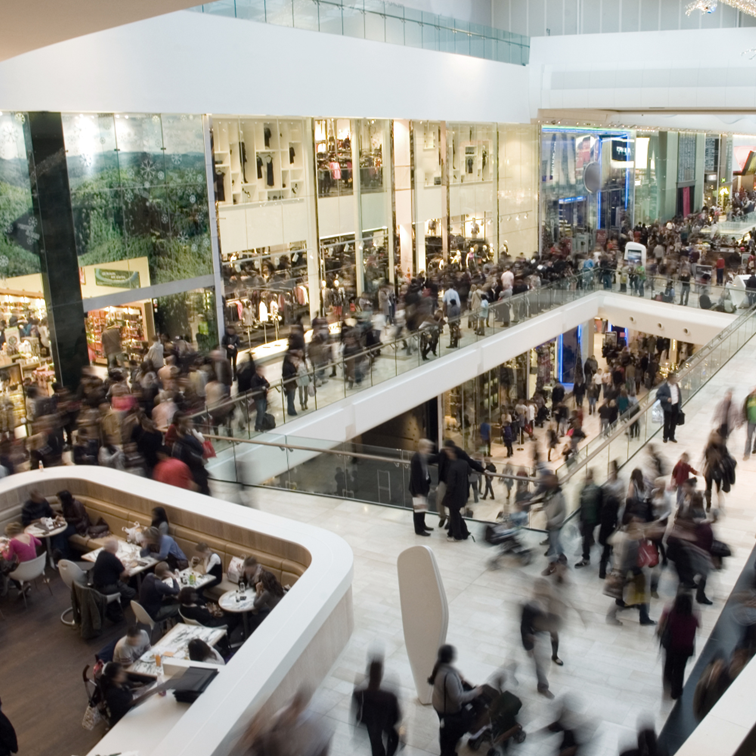
The sector is undergoing a fundamental transformation, shifting away from traditional transaction-led models toward experience-driven ecosystems. Shopping malls are no longer defined solely by retail activity; they are evolving into lifestyle destinations. This evolution is characterized by immersive design, thoughtfully curated programming, and environments that encourage social interaction and shareable experiences—reflecting changing consumer preferences in the post-pandemic era.
Within this landscape, “retailtainment” and food and beverage (F&B) offerings have emerged as key drivers of footfall. Interactive installations, pop-up activations, experiential dining concepts, and design-led retail formats are redefining the role of physical stores. Increasingly, both international and emerging brands are entering Jakarta with experiential, concept-driven approaches that position stores as brand showcases rather than purely transactional spaces.
In response, developers are pivoting from expansion-focused strategies toward asset reinvention. Efforts are concentrated on tenant remixing, physical repositioning, and active, ongoing programming. There is a growing emphasis on lifestyle, wellness, and entertainment categories, alongside continuous enhancements to the customer experience. These strategies aim to sustain relevance, strengthen engagement, and capture evolving consumer demand.
Despite ongoing challenges—including intensifying competition, limited availability of large-format retail space, and rising operating costs—the outlook for Jakarta’s retail sector remains positive. Future growth is expected to be driven by highly experiential retail formats, premium F&B expansion, and wellness-oriented concepts. As these trends gain momentum, Jakarta’s malls are set to further solidify their transformation into dynamic, experience-led ecosystems that extend far beyond traditional retail functions.